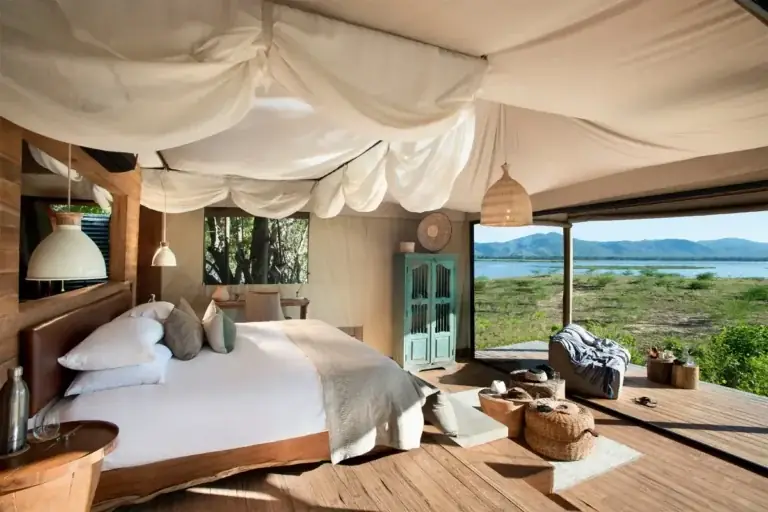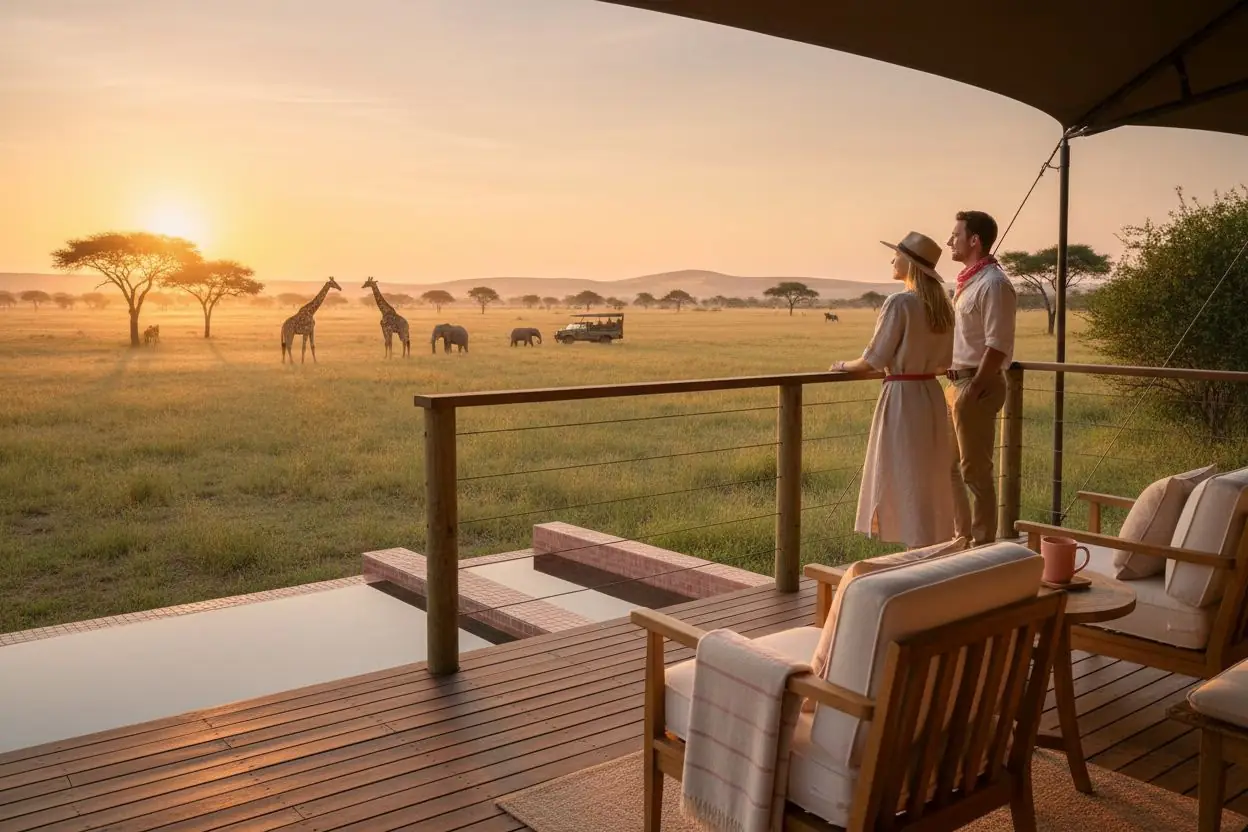
Best Luxury Safari for Couples: The Definitive Elite Guide
The contemporary discourse surrounding high-end wilderness expeditions frequently collapses a complex tapestry of conservation economics, logistics, and spatial design into a homogenous commercial category. What distinguishes a superficial journey through a game reserve from an enduringly transformative expedition lies in a subtle interplay of infrastructure, ecological stewardship, and hyper-personalized spatial autonomy. Modern travelers seeking exceptional travel experiences often encounter marketing materials that treat wilderness immersion as a monolithic product tier defined merely by thread counts or champagne vintages. In reality, the architecture of elite wildlife viewing is an intricate discipline requiring coordination across sovereign jurisdictions, private conservation concessions, and remote aviation networks.
Beneath the veneer of private plunge pools and cinematic sundowners lies a deeply technical ecosystem. The most sophisticated itineraries balance wildlife density, seasonal migration dynamics, anti-poaching funding models, and community land-lease agreements. When evaluating premium wilderness journeys tailored for romantic travel, discerning partners must look past superficial luxury amenities and examine how spatial exclusivity directly correlates with ecological integrity. A well-designed itinerary does not simply transport visitors to a viewing vehicle; it embeds them within a functional conservation economy where every logistical choice impacts local biodiversity and regional stability.
Navigating this domain demands an appreciation for the structural tensions inherent in contemporary eco-tourism. The expansion of high-end private reserves has created vital financial buffers for endangered species preservation, yet it simultaneously introduces questions regarding land access, cultural heritage, and ecological carrying capacity. Understanding these trade-offs transforms the planning process from a simple booking exercise into a deliberate engagement with global conservation efforts. The following sections dissect the anatomy of elite wildlife journeys, establishing rigorous frameworks for evaluation, financial planning, and risk mitigation.
Understanding “best luxury safari for couples”
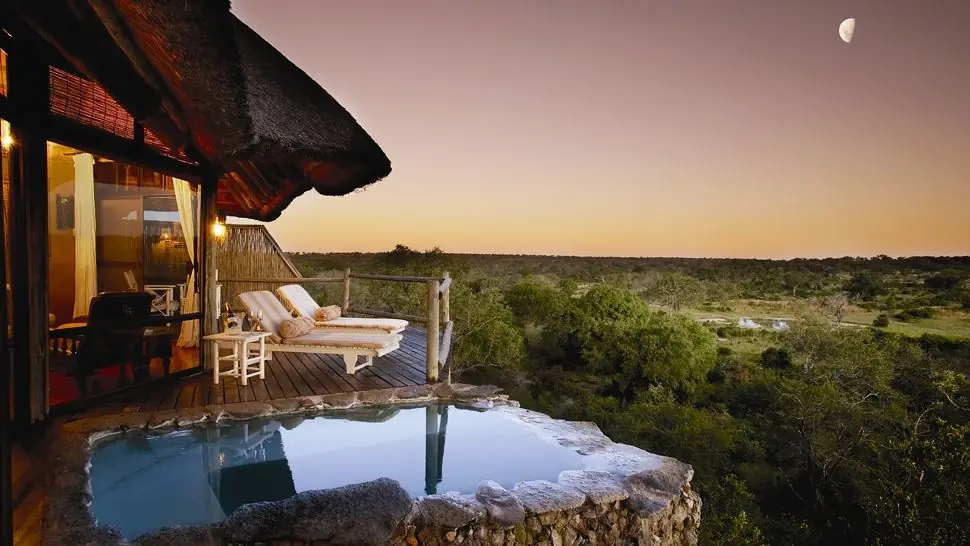
The phrase best luxury safari for couples frequently appears in travel literature as a catch-all descriptor for romantic African wildlife tours, yet its operational definition is considerably more rigorous. At its core, selecting the best luxury safari for couples refers to a bespoke, highly orchestrated itinerary that prioritizes absolute spatial privacy, uncompromising ecological access, seamless multi-modal logistics, and direct contributions to biodiversity preservation. It is defined not by gilded excess or superficial romance tropes, but by the removal of friction between partners and the natural world.
A primary misunderstanding in this space is the conflation of physical luxury—such as private plunge pools or champagne breakfasts—with true wilderness exclusivity. In premier wildlife regions, the ultimate luxury is scarcity: the absence of other vehicles at a predator sighting, the freedom to traverse off-road to track a leopard through dense riverine forest, and the privilege of undisturbed silence beneath a nocturnal sky. Oversimplifying these journeys as mere romantic packages ignores the intricate web of conservation leases, private airstrip clearances, and specialist guide training that makes authentic wilderness immersion possible.
Furthermore, when evaluating the best luxury safari for couples, planners must recognize that these itineraries are rarely static templates. They are dynamic constructs that adapt to seasonal rainfall patterns, animal migration routes, and regional political climates. Evaluating what makes an itinerary superior requires examining how well it reconciles intimacy and human comfort with raw, unpredictable natural environments. When executed correctly, high-end wilderness planning achieves a delicate equilibrium: absolute safety and refined hospitality paired with genuine exposure to wild, untamed ecosystems.
Deep Contextual Background: The Evolution of Elite Wilderness Travel
To understand contemporary high-end wildlife expeditions, one must trace the ideological shift from colonial hunting expeditions to modern conservation-funded tourism. In the late nineteenth and early twentieth centuries, elite travel across East and Southern Africa was dominated by large-scale hunting safaris, characterized by heavy caravans, permanent base camps, and resource extraction. These excursions viewed the natural world as a boundless resource to be conquered or cataloged.
The mid-twentieth century marked a pivotal transition. As large mammal populations dwindled due to unchecked hunting and agricultural expansion, regional governments began establishing national parks. However, traditional state-run conservation models often struggled with underfunding and human-wildlife conflict. This financial vacuum catalyzed the rise of the private conservation model in the late 1980s and 1990s, particularly in countries like Zimbabwe, South Africa, Botswana, and later Kenya and Tanzania.
Pioneering conservationists and tourism entrepreneurs recognized that high-value, low-impact tourism could generate the revenue needed to lease vast tracts of land, restore depleted wildlife populations, and employ local communities as active stewards of the land. This era birthed the modern mobile luxury tented camp and the ultra-exclusive private concession—areas where visitor numbers are strictly controlled, and commercial interests are explicitly aligned with ecological restoration. The historical trajectory thus reveals a clear lesson: modern elite travel is intrinsically tied to economic incentives for land preservation. Without the capital injection from sophisticated travelers, vast corridors of vulnerable wilderness would likely succumb to agricultural conversion or fragmentation.
Conceptual Frameworks and Mental Models
Evaluating complex wilderness itineraries requires structured thinking. Below are four mental models designed to help couples and planners assess the structural integrity of an expedition.
-
The Friction-to-Immersion Ratio: This model measures how efficiently logistical obstacles are removed without isolating travelers from the environment. High friction involves lost luggage, grueling road transfers, and inflexible camp schedules. Low, healthy friction means private charter flights, seamless border clearances, and bespoke daily pacing that maximizes time in the field.
-
The Conservation-Capital Vector: This framework evaluates every dollar spent on an itinerary based on its direct impact on habitat protection, anti-poaching operations, and community employment. A plan scores high on this vector when accommodation providers hold long-term land leases, run community-owned trusts, and transparently reinvest profits into ecological monitoring.
-
The Spatial Exclusivity Index: Wildlife viewing quality degrades rapidly with vehicle congestion. This model assesses the ratio of guests to wilderness hectares and the enforcement of traversing rights. True elite plans operate within private concessions where vehicle numbers are capped, off-road driving is permitted for tracking, and night safaris are allowed.
-
The Environmental Resiliency Matrix: Ecosystems are volatile. This mental model tests an itinerary’s adaptability to extreme weather events, seasonal droughts, unseasonal flooding, or shifting animal migration patterns. A resilient plan incorporates mobile camps that can relocate or alternative regional nodes that guarantee exceptional viewing regardless of climatic anomalies.
Key Categories, Variations, and Trade-Offs
High-end wilderness journeys manifest in several distinct structural formats. When curating the best luxury safari for couples, operators must weigh each category against specific romantic and ecological objectives.
1. Private Concession Tented Expeditions
-
Description: Camps located on privately leased land adjacent to or within major national parks, offering exclusive traversing rights and freedom from national park vehicle limits.
-
Trade-Offs: Exceptional wildlife viewing density and flexibility (night drives, walking safaris, off-road tracking); higher daily cost structures; accommodations are canvas-and-timber structures rather than permanent masonry.
2. Mobile Wilderness Traversals
-
Description: Fully staffed, private mobile camps that pitch and dismantle across remote wilderness areas, following seasonal migrations or lesser-known river systems.
-
Trade-Offs: Ultimate immersion in remote, untouched landscapes; highly ephemeral infrastructure with limited permanent amenities; requires meticulous seasonal timing.
3. Fixed Luxury Lodge Circuits
-
Description: Journeys utilizing a network of permanent, ultra-luxury lodges managed by high-end hospitality brands, connected via private charter bush flights.
-
Trade-Offs: Predictable, world-class comfort, spa facilities, and fine dining; sharing concessions with other guests of the same lodge; less private overall than exclusive-use setups.
4. Exclusive-Use Estate and Villa Rentals
-
Description: Renting an entire private homestead or bush villa, complete with dedicated private chef, butler, private game vehicle, and dedicated guide.
-
Trade-Offs: Ultimate privacy and schedule customization for couples seeking total seclusion; significantly higher financial commitment; restricted to specific fixed geographic nodes.
5. Multi-Country Trans-Frontier Expeditions
-
Description: Complex cross-border itineraries spanning multiple sovereign conservation areas (e.g., combining the Okavango Delta, Victoria Falls, and the Serengeti).
-
Trade-Offs: Unmatched ecological and landscape diversity; heavy reliance on regional bush flight logistics and complex visa/customs coordination.
6. Marine and Coastal Wildlife Combinations
-
Description: Itineraries pairing inland terrestrial safaris with marine conservation nodes (e.g., fusing the Kruger ecosystem with the Bazaruto Archipelago).
-
Trade-Offs: Balanced exposure to diverse biomes (big game plus marine life); requires multiple distinct packing lists and varied micro-climatic preparation.
| Category | Primary Benefit | Key Operational Risk | Best Suited For |
| Private Concession Tented | Absolute exclusivity and tracking freedom | Higher cost per night | Couples seeking serious wildlife photography and romantic isolation |
| Mobile Wilderness Traversals | Deep wilderness immersion | Weather vulnerability and basic infrastructure | Adventurous couples seeking raw, unplugged experiences |
| Fixed Luxury Lodge Circuits | Consistent, high-end hospitality | Shared camp environments | First-time luxury travelers prioritizing spa amenities |
| Exclusive-Use Estates | Complete schedule autonomy | Substantial financial commitment | Honeymooners wanting complete seclusion from other guests |
| Multi-Country Trans-Frontier | Maximum ecological diversity | Complex customs and flight logistics | Extended vacation travelers with flexible timelines |
Decision Logic for Category Selection
Choosing among these categories requires weighing personal tolerance for rustic elements against the desire for raw wilderness access. Couples prioritizing absolute privacy and romantic seclusion should gravitate toward private concessions or exclusive-use estates. Conversely, those seeking diverse geographical landscapes across a single holiday benefit from fixed lodge circuits connected by light aircraft.
Detailed Real-World Scenarios and Decision Logic
To ground these concepts in reality, consider four distinct operational scenarios encountered by luxury couples.
A : The Milestone Honeymoon
-
Context: A newly married couple seeks an unforgettable honeymoon blending high-end romance with authentic wildlife immersion, desiring privacy without isolation.
-
Constraints: Fixed travel dates following a wedding; zero tolerance for logistical friction or crowded game vehicles.
-
Decision Path: The planner selects a private concession in the Timbavati, booking a luxury treehouse suite with a private plunge pool. They add a dedicated vehicle and guide to ensure the couple dictates their own daily game-viewing pace.
-
Failure Mode & Second-Order Effect: Sharing a game vehicle with four strangers can dilute the intimacy of a honeymoon. By pre-booking private vehicle status, the couple ensures complete autonomy, though the second-order effect is an increased daily surcharge.
B : The Anniversary Photography Expedition
-
Context: A couple celebrating a milestone anniversary wishes to capture exceptional leopard and wild dog imagery while enjoying refined evening hospitality.
-
Constraints: Heavy camera gear requirements; need for uninterrupted tracking time at predator sightings.
-
Decision Path: Selection of the Mara North Conservancy in Kenya, utilizing a permanent luxury tented camp known for exceptional big cat density and professional photographic vehicle modifications.
-
Failure Mode & Second-Order Effect: Standard lodge vehicles carry six passengers, leading to lens crowding. Securing a private guide and vehicle eliminates this, allowing the couple to wait patiently for prime photographic light without peer pressure.
C : The Remote Wilderness Reconnection
-
Context: A busy executive couple seeks a complete digital detox and deep psychological reset in an untouched, remote landscape.
-
Constraints: Willingness to trade Wi-Fi and permanent masonry rooms for raw canvas tents and campfire dinners under the stars.
-
Decision Path: Deployment of a private mobile walking safari in Zimbabwe’s Mana Pools, accompanied by a seasoned private professional guide.
-
Failure Mode & Second-Order Effect: Total lack of cellular connectivity can cause anxiety if emergency family contact is needed. Mitigation involves utilizing camp satellite terminals strictly for emergency situational awareness.
D : The Bush-to-Beach Coastal Honeymoon
-
Context: A couple wanting a balanced itinerary that pairs high-adrenaline predator tracking with restorative marine downtime.
-
Constraints: Limited vacation window; aversion to multi-leg commercial flight delays.
-
Decision Path: Pairing an exclusive lodge in the Okavango Delta with a private island retreat in Mozambique, connected via seamless private charter flights.
-
Failure Mode & Second-Order Effect: Luggage weight restrictions on small bush planes require strict packing compliance. The solution involves pre-arranging laundry services at every camp to minimize clothing volume.
Planning, Cost, and Resource Dynamics
Constructing an elite wilderness journey requires understanding the multi-layered cost architecture. Unlike standard travel where expenses scale linearly with hotel star ratings, luxury safaris involve fixed infrastructural overheads in hyper-remote regions.
Direct and Indirect Cost Components
-
Direct Costs: High-end nightly tariffs, private concession conservation fees, specialized guide retainers, private bush plane charters, and premium cellar wine selections.
-
Indirect Costs: Comprehensive medical evacuation insurance (e.g., MedAir or equivalent), specialized gear acquisition, pre-safari malaria prophylaxis, and carbon-offset contributions.
-
Opportunity Cost: The primary opportunity cost is time. Packing too many disparate regions into a single itinerary results in excessive time spent in transit strips rather than experiencing the bush.
Financial Variability Matrix
The table below illustrates the typical daily investment ranges per person for different tiers of high-end expedition planning, reflecting seasonal fluctuations and logistical complexity.
| Tier | Daily Investment Range (USD) | Primary Inclusions | Key Cost Driver |
| Boutique Lodge Circuit | $1,500 – $3,000 | Luxury tented suites, shared game drives, all meals and local drinks | Fixed lodge infrastructure and scheduled bush flights |
| Private Concession Exclusive | $3,500 – $7,000 | Private vehicle, specialist guide, exclusive-use villa, premium cellar | Dedicated staff-to-guest ratio and private traversing leases |
| Ultra-Custom Expedition | $8,000 – $15,000+ | Private jet transfers, mobile camp deployment, conservation researchers | Bespoke logistics, custom airstrip access, and remote deployment |
Tools, Strategies, and Support Systems
Executing a flawless high-end itinerary relies on specialized tools and operational networks that operate invisibly behind the scenes.
-
Specialist Destination Management Companies (DMCs): Boutique agencies with boots-on-the-ground intelligence who maintain direct relationships with camp owners and private pilots.
-
Advanced Flight Tracking and Charter Networks: Real-time monitoring systems used by charter brokers to manage weather disruptions and airstrip clearances across remote African savannahs.
-
Medical Evacuation Memberships: Specialized air-ambulance subscriptions that guarantee immediate emergency extraction from remote coordinates to advanced trauma centers.
-
Custom Gear and Satellite Communications: High-grade optical equipment, dust-proof transport cases, and Garmin inReach or satellite communication devices for deep remote travel.
-
Conservation Trust Portals: Databases and direct reports from organizations like African Parks or regional wildlife trusts that verify how tourism dollars support specific conservation zones.
-
Biosecurity and Customs Concierges: Specialized airport representatives who expedite firearm permits (if applicable), camera gear carnets, and international visa clearances.
-
Seasonal Wildlife Movement Trackers: Proprietary meteorological and ecological data feeds utilized by top guides to predict localized game concentrations.
Risk Landscape and Failure Modes
Even the most meticulously designed itineraries are subject to environmental, geopolitical, and logistical vulnerabilities. Understanding these risk categories is essential for effective mitigation.
1. Climatic and Environmental Disruption
-
Risk: Unseasonal heavy rainfall washing out unpaved airstrips, or severe droughts altering animal distribution and drying up permanent waterholes.
-
Compounding Effect: Stranded travelers miss international connections, leading to cascading cancellations.
-
Mitigation: Retain flexible routing options and ensure travel insurance policies cover weather-related charter delays.
2. Logistical Bottlenecks in Remote Transit
-
Risk: Mechanical failure of a single-engine bush plane or luggage weight limit violations on small aircraft transfers.
-
Compounding Effect: Loss of precious game-viewing time and logistical friction at remote bush hubs.
-
Mitigation: Work with operators who maintain backup aircraft networks within the same region.
3. Geopolitical and Regulatory Shifts
-
Risk: Sudden changes in park entry fees, visa regulations, or cross-border tax policies by sovereign governments.
-
Compounding Effect: Unexpected cost escalations mid-planning or entry refusals at border posts.
-
Mitigation: Partner with on-the-ground DMCs who maintain real-time regulatory compliance updates.
4. Human-Wildlife Safety Incidents
-
Risk: Failure to adhere to strict camp safety protocols regarding wild animal movements through unfenced camps.
-
Compounding Effect: Severe physical injury or medical emergency in a location hours away from a hospital.
-
Mitigation: Rigorous adherence to ranger briefings and constant vigilance during nocturnal hours.
Governance, Maintenance, and Long-Term Adaptation
Maintaining the integrity of a high-end travel plan requires ongoing oversight, review, and adaptation, particularly for couples who embark on annual or recurring wilderness expeditions.
-
Pre-Trip Review Cycles: A mandatory audit of the itinerary 90 days prior to departure to verify seasonal updates, lodge management changes, and airstrip conditions.
-
Post-Expedition Debriefing: Systematic evaluation of guide performance, vehicle quality, and logistical smoothness shared with the booking DMC to refine future planning.
-
Conservation Impact Auditing: Reviewing annual reports from visited private concessions to ensure financial commitments to local communities and anti-poaching units were honored.
-
Ecosystem Monitoring Integration: Tracking regional climate trends and disease outbreaks (e.g., malaria or foot-and-mouth restrictions) to adjust future destination choices.
Layered Operational Checklist
-
Financial Security: Verify bonded escrow accounts and comprehensive travel insurance coverage.
-
Medical Preparedness: Confirm up-to-date vaccinations, prophylactic medications, and evacuation memberships.
-
Logistical Precision: Cross-check all bush flight weight restrictions against packing requirements.
-
Ethical Verification: Confirm that camp operators practice ethical wildlife viewing (no baiting, ethical distance from predators).
Measurement, Tracking, and Evaluation
Assessing the success of a luxury wilderness journey requires both qualitative and quantitative indicators. Unlike corporate projects, the return on investment in elite travel is measured in experiential depth, photographic yield, and conservation contribution.
Leading vs. Lagging Indicators
-
Leading Indicators: The quality of the pre-trip briefing documents, the responsiveness of the specialist DMC, and the clarity of safety protocols provided prior to departure.
-
Lagging Indicators: The actual wildlife viewing density, the depth of intellectual engagement with guides, the smoothness of transit connections, and the emotional resonance of the journey upon return.
Qualitative vs. Quantitative Signals
-
Quantitative Metrics: Percentage of time spent in the field versus in transit; ratio of exclusive sightings to shared vehicle encounters; exact financial contribution directed to local anti-poaching funds.
-
Qualitative Signals: The level of personal connection established with trackers and guides; the absence of logistical stress; the sensory immersion in untouched acoustic environments.
Documentation Examples
-
Expedition Journal: A daily log recording species sightings, behavioral notes, weather conditions, and guide insights.
-
Conservation Impact Ledger: A documented breakdown showing how nightly accommodation tariffs translated into localized community employment and anti-poaching patrols.
-
Photographic Archive Audit: A structured review of image capture success, reflecting the adequacy of vehicle positioning and guide positioning expertise.
Common Misconceptions and Oversimplifications
The commercialization of wilderness travel has generated several persistent myths that hinder effective planning.
-
Myth 1: More expensive camps always guarantee better wildlife viewing.
-
Correction: Wildlife is nomadic and bound by ecological carrying capacity, not room tariffs. A lower-cost mobile camp placed in a prime migratory corridor frequently outperforms an ultra-luxury permanent lodge located in a depleted game area.
-
-
Myth 2: Safaris are relaxing beach-style vacations.
-
Correction: Elite wildlife journeys involve early pre-dawn wake-up calls, dusty tracks, extreme temperature swings, and intellectually demanding tracking sessions. They are immersive field expeditions disguised as holidays.
-
-
Myth 3: All private concessions offer the same level of freedom.
-
Correction: Traversing rights vary wildly. Some concessions restrict vehicles to established tracks, while others permit total off-road tracking of predators. Legal covenants must be verified individually.
-
-
Myth 4: Booking direct is always superior to using a specialist DMC.
-
Correction: In remote African regions, boutique DMCs hold vital leverage, priority booking status, and emergency response networks that individual consumers cannot replicate.
-
-
Myth 5: Seasonality is a minor detail easily overcome by luxury amenities.
-
Correction: Seasonal rains, dry periods, and migration timing dictate whether a region is teeming with wildlife or entirely devoid of animals. No amount of interior luxury compensates for poor seasonal timing.
-
-
Myth 6: Conservation fees cover all regional ecological needs.
-
Correction: Standard park fees often disappear into central government treasuries. True conservation impact requires booking camps that fund private land trusts and direct community anti-poaching units.
-
Ethical, Practical, and Contextual Considerations
Engaging with fragile wilderness environments carries profound ethical responsibilities. The presence of high-net-worth travelers can exert immense pressure on local ecosystems if not managed with rigorous restraint. Ethical considerations demand that tourism operators respect animal behavior by maintaining respectful distances, avoiding the crowding of den sites, and strictly prohibiting artificial baiting or harassment for photographic gain.
Furthermore, the socioeconomic relationship between luxury camps and neighboring rural communities is vital. True sustainability requires that local populations derive tangible, equitable benefits from conservation tourism—ranging from skilled employment and educational funding to healthcare infrastructure. Travelers who interrogate the operational ethics of their chosen providers ensure that their presence reinforces, rather than disrupts, the delicate balance between human aspiration and ecological preservation.
Synthesis and Conclusion
The curation of elite wilderness expeditions is an exacting discipline that bridges rigorous logistics, ecological literacy, and aesthetic refinement. Moving beyond superficial marketing gloss reveals a sophisticated ecosystem where every structural choice—from private concession leases to bush flight routing—shapes both the traveler’s experience and the survival of vulnerable habitats.
Approaching this domain with patience, intellectual rigor, and an insistence on structural transparency transforms a standard holiday into a profound engagement with the natural world. By prioritizing spatial exclusivity, conservation integrity, and seamless operational design, couples can experience the wilderness in its most authentic, untamed state—ensuring that these fragile sanctuaries endure for generations to come.