Common Safari Packing Mistakes: The Definitive Guide to Expedition Prep
Preparing for a wildlife trip is hard. People often approach it like normal resort travel. They forget that remote wilderness areas lack local shops. You must rely entirely on what you pack.
However, you face strict limits. Bush planes enforce tight weight caps. Rugged roads test your gear. When travelers fail to manage these rules, they make big mistakes. These errors hurt comfort and field efficiency.
Proper preparation requires smart resource management. Your gear dictates your thermal safety and bug protection. It affects photo stability and vehicle space. Overpacking causes friction with pilots. Underpacking exposes you to harsh cold and sun.
This guide fixes those issues. We break down the exact pitfalls. You will learn how to pack like a true professional.
Understanding “common safari packing mistakes”
Analyzing common safari packing mistakes starts with a simple truth. Wilderness travel inverts normal fashion logic. First-time travelers often assume gear should match standard camping supplies.
The False Equivalence
This mistake leads people to pack heavy hiking boots. They bring bright, loud clothing colors, too. These choices disrupt wildlife behavior. They also clash with required earthy tones.
Luggage and Temperature Errors
Travelers also misunderstand luggage. They bring hard-shelled suitcases with wheels. Bush planes reject these rigid frames immediately. Small aircraft need soft duffels.
Furthermore, tourists misjudge sub-Saharan temperatures. They pack only for hot days. They forget freezing morning winds during open-vehicle drives. You must shift from reactive packing to smart curation.
Deep Contextual Background
Modern safari standards evolved from old exploration caravans. Early expeditions relied on massive porter teams and heavy canvas trunks.
The Bush Aviation Shift
Overland limits were tied to human or animal strength. Later, commercial bush aviation changed everything. Remote camps rely on light aircraft like the Cessna Caravan.
These planes enforce strict rules. They limit bags to fifteen kilograms. They demand soft-sided bags to fit curved cargo holds.
Textile Tech vs. Traveler Habits
Meanwhile, the textile industry advanced rapidly. Brands moved from heavy wool to advanced synthetic weaves. They created bug-repellent treatments like permethrin.
Yet, traveler habits lagged behind. Many tourists still use outdated packing styles. This creates constant friction at bush airstrips today.
Conceptual Frameworks and Mental Models
You need strong mental models to avoid packing traps. They expose hidden logistical risks.
Volumetric and Thermal Models
First, use the Volumetric-Mass Equilibrium Model. Every item takes up space and adds weight. Heavy items must prove their multi-functional worth. Next, use the Diurnal Thermal Matrix. Safari weather swings wildly from freezing dawns to hot afternoons. Layer your clothes so you can peel them off easily.
Ecological and Redundancy Models
Animals see and hear differently than humans. Choose muted earth tones like khaki or olive. Avoid loud colors or rustling synthetic fabrics. Finally, apply the Redundancy Spectrum. Prioritize medical and optical gear over extra evening wear.
Key Categories and Structural Variations
Optimizing your gear means analyzing distinct functional categories. Here is how to scale your manifest correctly.
Luggage and Footwear Adjustments
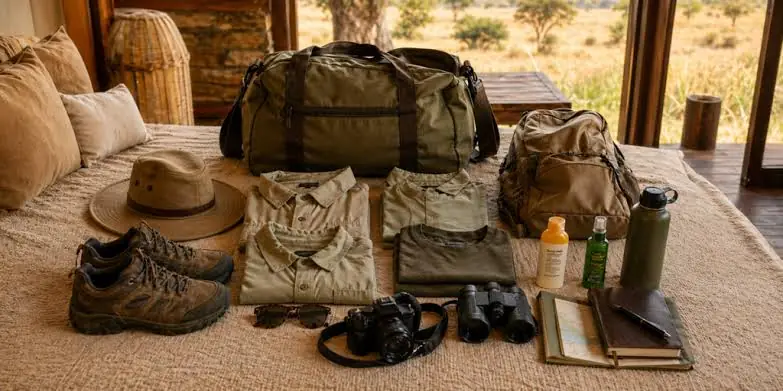
Swap hard suitcases for flexible soft duffels. This satisfies flight rules instantly. Transition from heavy alpine boots to lightweight trail shoes. They dry much faster and reduce foot fatigue.
Apparel and Optics
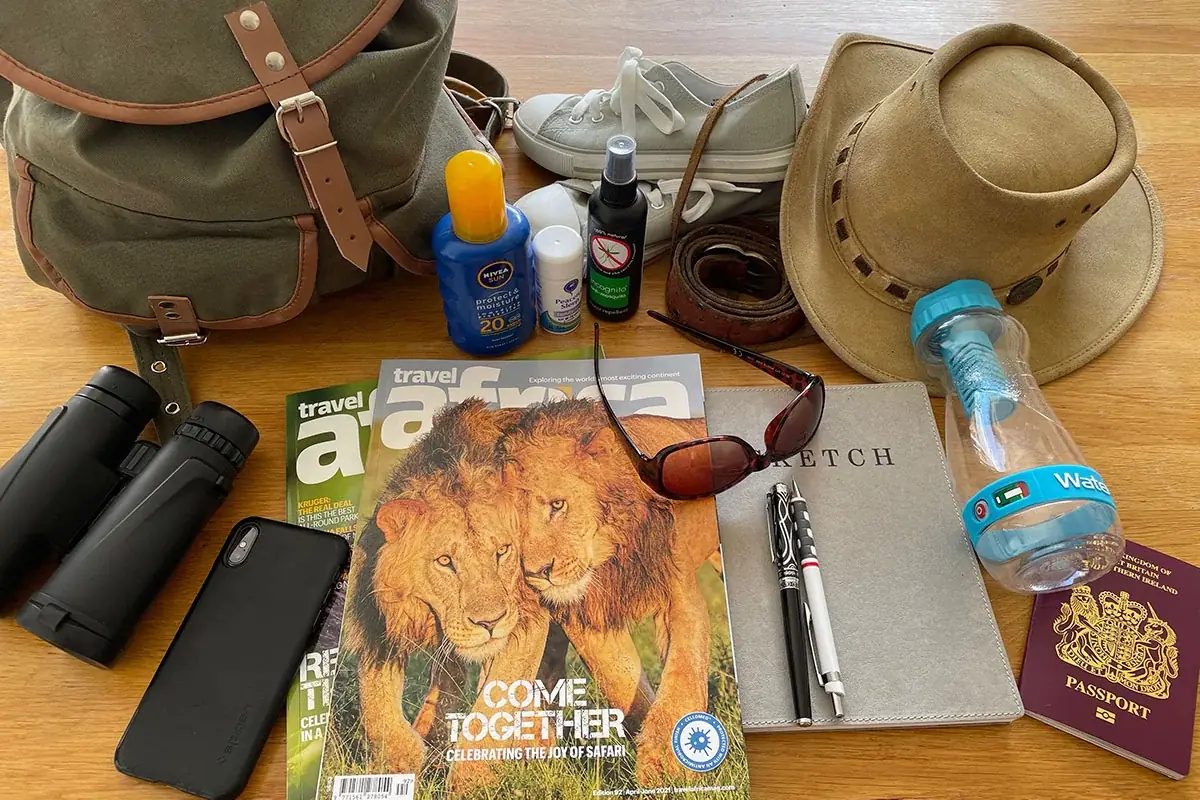
Use a three-layer thermal system instead of a bulky parka. Pick muted earth tones. Avoid black or navy, because tsetse flies love dark colors. Choose compact zoom lenses and beanbags instead of heavy tripods.
Defense, Water, and Power
Pack mineral sunscreens and wide-brim hats. Bring sealed steel water bottles and dry bags for dust. Use multi-port USB chargers instead of heavy power bricks.
| Category | Amateur Approach | Optimized Approach | Trade-Off |
| Luggage | Hard-shelled suitcases. | Flexible soft duffels. | No rigid frame; pack carefully. |
| Footwear | Heavy leather boots. | Lightweight trail shoes. | Less ankle stiffness; fast dry. |
| Outerwear | Bulky winter parka. | Modular three-layer system. | Needs management; great warmth. |
| Colors | Bright colors and black. | Muted earth tones. | Lacks style; keeps animals calm. |
| Support | Heavy tripods. | Beanbags and monopods. | No static setups in cars. |
| Laundry | Separate outfit daily. | Use camp laundry services. | Depends on dry times. |
Realistic Decision Logic
Building a clean packing list takes discipline. First, verify your bush-plane weight limit. Second, lay out your clothes and use camp laundry to cut numbers down. Third, ensure every shoe serves two functions. Fourth, weigh your gear digitally to stay under limits. Finally, pack rain gear on top for fast access.
Detailed Real-World Scenarios
Real-world scenarios show how packing strategies perform under pressure.
The Rigid Suitcase Rejection
A traveler brings an 18-kilogram hard suitcase to a bush airstrip. The pilot rejects it because it cannot fit the cargo hold. The traveler must unpack on the tarmac and pay a heavy fee. They lose time and start the trip stressed.
The Tsetse Fly Color Trap
A tourist wears dark navy shirts to look stylish. They enter a tsetse-prone region. Tsetse flies actively hunt dark colors. The traveler suffers endless bites while others in khaki stay safe. Color choices affect health directly.
The Morning Drive Freeze
A visitor dresses in thin linen for a dawn game drive. As the car speeds across the plains, windchill drops temperatures fast. Without a windproof shell, the traveler freezes. They cut the drive short and miss a rare leopard sighting.
Planning, Cost, and Resource Dynamics
Balancing gear quality requires mapping financial streams. You must track direct and indirect costs.
Direct and Indirect Costs
Direct costs include technical clothes and soft bags. Indirect costs involve shipping fees and camera insurance. Buying cheap gear often backfires. Opportunity costs appear when you spend money on vanity items instead of safety tools.
| Cost Dimension | Low Range | High Range | Control Variable |
| Soft Luggage | $60 – $150 | $400 – $900 | Material durability. |
| Apparel Suite | $200 – $500 | $1,500 – $3,500 | Brand and permethrin. |
| Optical Support | $50 – $150 | $800 – $2,500 | Glass and stability. |
| Contingency | 5% of budget | 15% of budget | Emergency reserves. |
Tools, Strategies, and Support Systems
Flawless execution requires specific operational tools.
Scales, Cubes, and Treatments
Weigh your packed bags with a digital scale before leaving. Use compression cubes to save space and block dust. Spray natural clothes with permethrin 48 hours prior to departure.
Adapters, Silica, and Manifests
Bring universal plug adapters. Use silica packets in camera bags to block humidity. Store memory cards in anti-static cases. Always cross-check camp packing guides provided by your local operator.
Risk Landscape and Failure Modes
Packing errors create compounding risks in remote areas.
Cascading Failures
A forgotten headlamp or bad footwear choice ruins a trip. Blisters stop you from walking safaris. Dust ruins camera lenses if you lack cleaning tools. One small oversight triggers a chain reaction of trouble.
Electronic Overloads
Remote camps run on solar microgrids. Travelers who plug in too many heavy devices crash the power system. This creates friction with camp staff. Keep your electronic footprint small.
Governance, Maintenance, and Adaptation
Expeditions require careful long-term planning and review.
Milestone Audits
Check your packing manifest at 60 days, 30 days, and 7 days out. Monitor regional weather shifts to adjust clothing layers.
Post-Trip Care
When you return home, wash technical fabrics properly. Check zippers for dust. Restock your medical kits immediately.
Measurement, Tracking, and Evaluation
Track your packing success with hard numbers and feedback.
Metrics and Logs
Audit your total bag weight against airline limits. Use these documentation tools:
-
The Master Weight Ledger: Track every item and mass.
-
The Utility Matrix: Score items post-trip to cut future weight.
-
The Resilience Log: Record how gear handled dust and weather.
Common Misconceptions
Travelers hold many false beliefs about safari packing.
Footwear and Camouflage Myths
Many think heavy steel-shank boots are best. Actually, lightweight trail shoes work better in cars. People think military camo helps. In truth, it is illegal in some parks. Wear solid earth tones instead.
Clothing and Tech Myths
Travelers pack formal wear for dinners. Camps are smart-casual; formal clothes waste weight. People also assume high-wattage hair tools work everywhere. Solar microgrids cannot handle them. Pack smart.
Ethical, Practical, and Contextual Considerations
Your gear choices impact local conservation efforts.
Bring reusable water bottles and biodegradable items. Leave no plastic waste behind in pristine parks. Respect local village dress codes. Responsible packing protects ecosystems and local communities.
Conclusion
Mastering expedition prep requires discipline and logic. Eliminate common mistakes like heavy suitcases and loud clothing. This protects you from operational friction. Proper preparation ensures self-comfort and ecological harmony. Thorough planning is the ultimate key to an elite safari experience.