How to Avoid Hidden Safari Fees: The Definitive Financial Guide
Planning a wildlife safari can feel like walking through a financial maze. Many travelers look at a booking quote and assume it covers everything. Sadly, the initial price is often just a baseline deposit. Hidden costs lurk behind third-party taxes, park levies, and transit rules.
If you want to master how to avoid hidden safari fees, you must look closely at how tour operators structure their prices. Safaris cross paths with multiple governing bodies, from national parks to local communities. Each group adds its own charges. Without a clear plan, unexpected bills for conservation taxes or luggage limits will hit your wallet upon arrival.
Historical travel norms also play a role. Companies often use low starting prices to catch your eye, adding profit margins through local extras later. Currency shifts and sudden government tax changes make things even harder. This guide breaks down these financial layers. It gives you the exact tools you need to decode safari pricing and enjoy a transparent, stress-free trip.
Understanding “how to avoid hidden safari fees”

Mastering how to avoid hidden safari fees starts with one simple truth: safari pricing is nothing like booking a standard hotel. Regular hotels cover your room, tax, and basic amenities. A safari, however, is a complex mix of transport, lodging, park access, expert guides, and heavy gear rental. Because different vendors supply these parts, billing gets messy very fast.
First-time travelers often think booking through a luxury agency protects them from extra costs. That is a risky assumption. Even top-tier operators might leave out crucial operational costs to look cheaper than their rivals. For instance, a quote might cover daytime park entry but skip night drives or vehicle registration fees. Once you sign the contract, you lose your leverage.
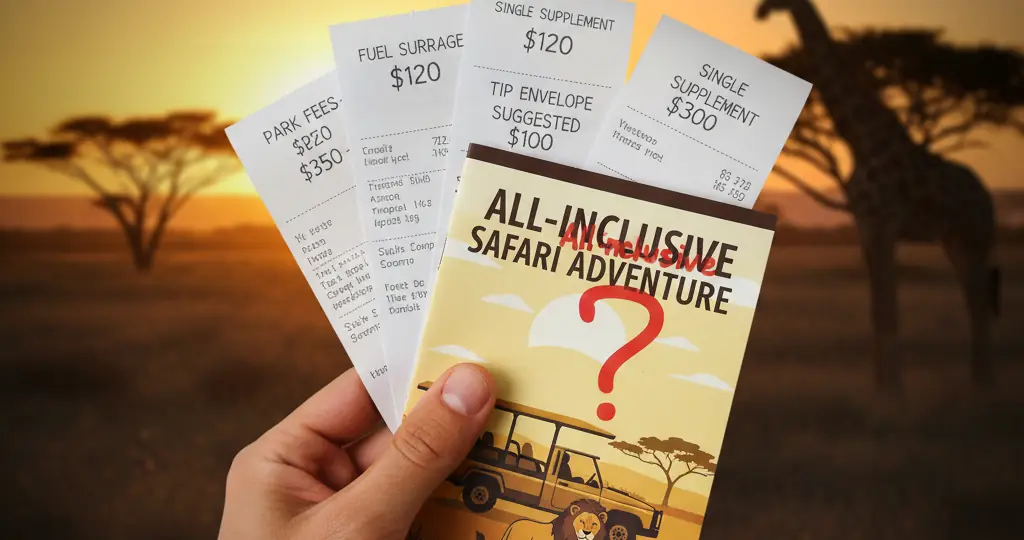
Another major trap is the misuse of terms like “all-inclusive.” One lodge might mean three meals and house drinks, while another includes premium liquor, laundry, and community taxes. You must audit every line of your contract. Look past the big bottom-line number and study the cost structure underneath.
The Evolution of Safari Pricing Systems
Safari pricing has deep roots in the history of African wildlife conservation and land management. Back in the mid-twentieth century, national parks were managed by central governments. Access fees were low because tourism was just a side benefit of conservation. Over time, state budgets tightened. Governments told wildlife authorities to start funding themselves.
This shift created the modern system of park entry fees, conservation levies, and concession charges. Parks in countries like Tanzania, Kenya, and South Africa turned visitor access into a major income source. Governments often raise these fees every year. Tour operators face a tough choice when this happens: absorb the new costs or pass them to clients who already booked. This friction causes sudden post-booking price spikes.
At the same time, community conservation projects added more financial layers. Land once used for farming or hunting became ecotourism zones. This shift brought community development taxes and bed-night fees. While these charges help local people and protect wildlife, they create a confusing billing web for travelers.
Mental Models for Cost Mitigation
Using structured mental models helps you turn confusing financial data into clear choices. Here are four ways to view your safari budget:
-
The Total Cost of Operation (TCO) Model: Look past the main invoice. Add up every secondary cost, including tips, gear, visas, and medical evacuation insurance.
-
The Layered Access Model: Safaris cross national, regional, municipal, and private boundaries. Each border crossing brings new taxes. Treat every movement as a potential financial checkpoint.
-
The Variable-Fixed Cost Matrix: Split your expenses into fixed costs (government park permits) and variable costs (fuel surcharges, private vehicle rentals). This shows you where operators have room to negotiate.
-
The Asymmetric Information Principle: Remember that operators know local cost shifts better than you do. Do not accept bundled prices without asking questions.
Mental models give you clarity, but they have limits. No model can completely protect you against sudden government tax changes or wild currency swings. Use them as guideposts, not armor.
Key Categories of Safari Surcharges
Safari extra charges usually fall into a few clear groups. Spotting these categories helps you check your quotes before you sign anything.
-
Statutory and Regulatory Tariffs: Government park fees, conservation taxes, and municipal entry permits. These are mandatory and often left out of cheap ads.
-
Logistical and Transit Penalties: Bush-plane weight limits (usually 15 kg in soft bags), excess baggage fees, and vehicle relocation costs.
-
Concession and Bed-Night Levies: Private reserve or community fees for staying in specific ecological zones.
-
Operational Surcharges: Single supplements for solo travelers, fuel surcharges, and peak-season price bumps.
-
Equipment and Guiding Extras: Fees for photo vehicles, private guides, night gear, and exclusive vehicles.
-
Gratuity Expectations: Standard tips for camp staff and guides, which add up quickly if left unbudgeted.
-
Administrative and Payment Frictions: Wire transfer fees, credit card processing charges (3 to 5 percent), and currency conversion spreads.
-
Emergency Underwriting: Mandatory evacuation insurance and medical rescue bonds for remote areas.
| Surcharge Category | Financial Impact | Predictability | How to Handle It |
| Statutory Park Fees | High ($50–$150+/day) | Moderate | Lock rates in your contract or add a clear cap clause. |
| Bush Flight Baggage | Moderate ($100–$300/leg) | High | Buy extra weight early or pack light. |
| Single Supplements | Very High (30%–100%) | High | Look for solo-friendly pricing or room-share options. |
| Credit Card Fees | Low to Moderate (3%–5%) | High | Use bank wires or negotiate fees into the total price. |
| Private Vehicles | High ($200–$500+/day) | High | Check if private vehicle use is included in your base quote. |
How to Screen Your Quotes
Always ask for an itemized breakdown. Separate your accommodation, transport, park fees, and tips. Check the quoted park fees against official government websites. Confirm the exact weight limits for any bush planes you will take. If an agent hides fees in a vague “miscellaneous” line, walk away.
Real-World Scenarios and Stress Tests
Looking at actual travel situations shows how hidden fees catch people off guard.
The Cross-Border Expedition
A traveler books a 12-day trip across Kenya and Tanzania. The quote seems complete. But when crossing the border from the Maasai Mara to the Serengeti, the ground handler demands cash for vehicle permits and road tolls. On top of that, a strict 15 kg luggage limit on local flights leads to massive excess baggage fines because the agency failed to warn the traveler.
The Solo Traveler Trap
A solo photographer books a luxury camp advertised at a great per-person sharing rate. Suddenly, a 50 percent single supplement appears on the invoice. Because the camp uses shared vehicles, the photographer must pay an extra $400 a day to secure a private vehicle for good photo angles, doubling the daily cost.
The Park Fee Disconnect
An itinerary includes stays in private conservancies next to a major national park. The traveler assumes park fees are included everywhere. Once there, they find out that entering the main park triggers a second set of full-rate park permits and vehicle fees. This unexpected expense ruins the trip budget.
Planning, Cost, and Resource Dynamics
Smart financial planning balances upfront costs with future risk. Direct costs include lodging and permits. Indirect costs cover gear, insurance, and bank fees. If you choose a cheap third-party operator to save money now, a mistake on the ground will cost you much more later.
| Cost Dimension | Low Range | High Range | Key Control Variable |
| Statutory Park Access | $40 – $80/person/day | $150 – $300+/day | Choose your destination and travel season wisely. |
| Internal Transfers | $300 – $600/person | $1,500 – $3,500+ | Optimize routes and use shared group flights. |
| Admin & Banking | $50 – $150 total | $500 – $1,200+ | Pick smart payment methods and currency strategies. |
| Emergency Fund | 5% of total budget | 15%–20% total | Keep a dedicated liquid reserve fund ready. |
Tools and Support Systems
Using the right tools keeps you in control of your safari budget from start to finish.
-
Official Tariff Portals: Check government wildlife websites directly to verify real park fees.
-
Detailed RFQ Templates: Send request-for-quote forms that demand complete, unbundled cost details.
-
Multi-Currency Accounts: Use financial tools that lower conversion markups and wire fees.
-
Contract Riders: Add legal text to protect you if the government raises park fees after you book.
-
Independent Travel Advisors: Hire experts who have no financial ties to specific lodge chains.
-
Contingency Reserves: Set aside a separate pool of cash for unexpected transit or medical costs.
-
Lightweight Packing Gear: Use compact gear to avoid heavy bush-plane weight penalties.
-
Direct Provider Checks: Call camps directly to confirm if activities like night drives cost extra.
These tools help, but they are not magic. Government websites are sometimes outdated, and big operators might reject custom contract riders during peak season. Stay flexible.
Risk Landscape and Failure Modes
Financial risk on a safari snowballs quickly. A small oversight—like a delayed visa or missed bank wire deadline—triggers a chain reaction. A late visa forces a flight change, which ruins a prepaid bush connection, leading to heavy cancellation fees and hotel staging costs.
Another big mistake is assuming prices will stay stable when inflation is high. Operators quoting in foreign currencies often build in safety buffers or try to renegotiate if exchange rates move. Map out worst-case scenarios for every handoff in your trip to protect your budget.
Governance and Long-Term Adaptation
Keeping your finances on track over a long booking window requires regular check-ins. Safaris are often booked nearly a year in advance, and a lot can change in that time.
-
Monitoring Protocols: Call your booking agent every two months to check for new visa rules or park fee updates.
-
Review Triggers: Watch for host-country budget releases, which often signal upcoming park fee hikes.
-
Adjustment Iterations: Decide if pre-paying certain tariffs makes sense to lock in lower rates before government increases hit.
Tracking and Evaluation Frameworks
To know if your budget strategy worked, track your numbers. Compare your initial estimated budget against what you actually spent in every category. Look at qualitative signs, too: Did the operator communicate clearly? Did you breeze through park gates without wallet friction?
-
Ledger Tracking: Keep a spreadsheet comparing projected costs against real spending.
-
Itemization Grids: Use a checklist to confirm every meal, transfer, and permit is accounted for.
-
Contingency Logs: Keep dated notes on currency shifts and policy updates reviewed before you leave.
Common Misconceptions
-
Myth: All-inclusive lodges cover every single expense.
-
Correction: Luxury lodges often leave out third-party park fees, community taxes, spa services, and private vehicles.
-
-
Myth: Booking direct eliminates all hidden charges.
-
Correction: Small local operators may lack cash reserves and pass sudden government fee hikes directly to you.
-
-
Myth: Park fees stay the same all year.
-
Correction: Authorities can raise tariffs mid-year with very little warning.
-
-
Myth: International credit cards work everywhere without friction.
-
Correction: Remote camps often charge heavy credit card fees or have weak internet, forcing expensive bank wires.
-
-
Myth: Bush-flight luggage limits are flexible.
-
Correction: Strict weight rules are based on aircraft safety physics, not passenger counts.
-
-
Myth: Tipping is optional and unimportant.
-
Correction: Staff and guides rely heavily on tips, making them a vital fixed-variable cost.
-
-
Myth: Travel insurance covers all operational surprise costs.
-
Correction: Insurance covers medical emergencies, not government park fee hikes or airline luggage fines.
-
Ethical and Practical Considerations
Saving money should never come at the expense of local communities. Many conservancy fees and park taxes fund anti-poaching units, wildlife protection, and local jobs. Trying to dodge these specific fees hurts the exact ecosystems you came to see.
True mastery of how to avoid hidden safari fees means cutting out bad operator markups and administrative padding, not cheating conservation funds. Distinguish between unfair operator fees and real ecological investments. Transparent financial planning protects your wallet while helping preserve wildlife habitats for the future.
Conclusion
Mastering the finances of a wildlife expedition takes careful planning. By stripping away vague pricing, demanding itemized quotes, and tracking park tariffs and transport rules, you can eliminate financial surprises. Financial clarity and an amazing wilderness experience go hand in hand. With the right approach, your safari will remain seamless and economically sound from start to finish.