How to Plan Wilderness Trips Safely: The Definitive Guide to Backcountry Risk Management
Venture beyond maintained transportation corridors into remote backcountry environments, and the foundational assumptions of modern institutional safety dissolve entirely. In urban and suburban settings, human survival and operational continuity rely on dense redundancy networks. Emergency medical services operate on minutes-long response cycles. Municipal infrastructure is ubiquitous, and communication channels remain immediate. The wilderness strips away these safety buffers. It exposes human vulnerability to abrupt meteorological shifts, hydrological hazards, physiological breakdown, and navigational failure. Consequently, entering wild terrain demands an epistemological shift. We must move from passive reliance on external rescue systems to proactive, autonomous risk mitigation.
Mastering how to plan wilderness trips safely requires moving past the superficial checklists found in recreational manuals. True backcountry safety is not an accumulation of gadgets or emergency gear. It is an integrated discipline combining rigorous route reconnaissance, physiological self-awareness, environmental literacy, and probabilistic risk management. Every decision made prior to departure—from fuel weight calculations and caloric budgeting to micro-terrain analysis—compounds or degrades the expedition’s margin of error. When environmental conditions deteriorate or unforeseen injuries occur miles from the nearest trailhead, the quality of initial preparation dictates the boundary between managed inconvenience and catastrophic failure.
This definitive reference manual examines the systemic mechanics of backcountry expedition planning. It constructs rigorous mental models, evaluates equipment and physiological trade-offs, and details operational frameworks designed to maintain safety under extreme duress. By approaching wilderness travel through an analytical, systems-oriented lens, expedition leaders and independent travelers can cultivate genuine resilience. This ensures that deep engagement with remote landscapes remains sustainable, intellectually rewarding, and physically secure.
Understanding “how to plan wilderness trips safely”
At its core, how to plan wilderness trips safely is an exercise in resource optimization under high uncertainty and severe constraint. Wilderness environments are inherently dynamic systems. They feature non-linear interactions among weather patterns, terrain typography, equipment performance, and human psychology. A minor error in caloric estimation combined with an unexpected navigation delay can trigger a cascading series of failures. Safe planning requires recognizing that safety is not a static destination. It is a continuous, adaptive process of maintaining a positive margin between environmental demands and human capabilities.
The Fallacy of Rigid Itineraries
A widespread misconception assumes that safe planning involves locking in a precise, unalterable schedule before departure. While land management agencies often require itinerary filings for search-and-rescue utility, treating a plan as a rigid blueprint invites disaster. Real-world wilderness conditions frequently invalidate initial projections. Sudden river swells from upstream precipitation, early seasonal snowstorms, or acute physical injury alter the landscape rapidly. Safe planning incorporates structural flexibility, pre-planned bailout routes, and decision-making thresholds. These elements mandate retreat or adaptation when environmental indicators shift.
Oversimplification Risks and the Illusion of Control
Oversimplifying the wilderness planning process often manifests as an over-reliance on technological fail-safes. Satellite messengers and GPS waypoints offer comfort, but they do not prevent environmental exposure, hypothermia, or traumatic injury. Treating technology as a substitute for foundational navigational competency creates a dangerous risk-compensation loop. Individuals venture into more hazardous terrain simply because they carry an emergency beacon. True preparedness respects the objective hazards of the natural world. It prioritizes redundancy, self-reliance, and conservative judgment.
Deep Contextual Background: The Evolution of Backcountry Expedition Logistics
The contemporary methodology of backcountry travel is the product of a century-long evolution. It shifted from heavy, militaristic exploration paradigms to lightweight, systems-engineered recreation. Throughout the nineteenth and early twentieth centuries, deep wilderness excursions required massive logistical support structures. Canvas tents, cast-iron cookware, dense preserved rations, and extensive packing teams were standard. These expeditions operated on principles of brute-force endurance and massive cargo weight. They reflected the industrial era’s approach to overcoming environmental resistance through sheer material mass.
The post-World War II era initiated a radical transformation driven by innovations in synthetic materials and aerospace engineering. The introduction of nylon, closed-cell foams, and lightweight aluminum alloys drastically reduced base weights. Individuals could travel further and faster with autonomous self-sufficiency. However, this technological liberation introduced new vulnerabilities. As gear weights plummeted, trip objectives expanded in technical difficulty and remoteness. This expansion frequently outstripped the navigational and meteorological competencies of the average participant.
In the twenty-first century, digital mapping tools and satellite communication networks have accelerated this trend. Millions of participants now access remote environments with minimal formal apprenticeship in traditional woodcraft. This accessibility shift underscores the critical necessity for standardized, rigorous educational frameworks regarding wilderness risk management. As technology lowers the physical barrier to entry, analytical planning becomes the primary defense against systemic backcountry accidents.
Conceptual Frameworks and Mental Models for Wilderness Risk Management
Navigating remote environments safely requires robust mental models that structure decision-making under uncertainty, fatigue, and environmental stress.
The Human Factors Accident Triangle
This conceptual model posits that backcountry incidents rarely stem from a single failure. Rather, they result from the convergence of human fallibility, environmental hazards, and compromised decision-making. Psychological pressures—such as goal fixation, peer pressure, and cognitive fatigue—frequently impair risk assessment. Recognizing these internal human factors allows expedition leaders to institute circuit-breakers. These include mandatory group pauses for objective re-evaluation when conditions deteriorate.
The Marginal Safety Budget
This mental model views expedition resources as a finite financial account. Energy, daylight, water, caloric reserve, and equipment integrity all factor into this account. Every navigational error, unexpected delay, or gear failure represents an unbudgeted withdrawal. Safe planning requires maintaining a substantial unallocated surplus at all times. If resource depletion rates outpace distance covered, the model dictates an immediate tactical pivot, such as establishing an early camp or executing an evacuation.
The Objective vs. Subjective Hazard Matrix
This framework separates environmental threats into two distinct categories. Objective hazards—such as avalanches, rockfall, flash floods, and sudden meteorological collapse—exist independently of human presence. Subjective hazards involve poor route selection, inadequate hydration, improper clothing choices, and panic. These factors remain entirely within human control. Safe planning minimizes subjective compounding factors. This ensures the expedition retains sufficient physiological and cognitive bandwidth to react when objective hazards materialize.
Key Categories or Variations in Wilderness Planning Methodologies
Safe expedition design requires analyzing distinct planning methodologies, understanding their structural foundations, and evaluating trade-offs across various biomes.
Basecamp and Radial Exploration
Establishing a single, fortified permanent camp in a strategic location and conducting day-hikes or climbs outward from that node.
Linear Traversing (Point-to-Point)
Executing a continuous, multi-day journey from an entry trailhead to a distinct exit trailhead, requiring complete self-containment throughout.
Ultralight Fastpacking
Minimizing base weight to the absolute structural minimum to maximize daily mileage and mobility, trading comfort margins for speed.
Winter and Alpine Mountaineering
Planning expeditions centered on sub-zero thermal management, snow shelter construction, and specialized technical ice or rock protection systems.
| Planning Methodology | Primary Operational Focus | Structural Advantage | Key Operational Trade-Off |
| Basecamp Exploration | Minimizing daily pack weight and camp setup fatigue. | High logistical stability and rapid emergency recovery options. | Limited geographical exploration radius from the central node. |
| Linear Traversing | Maximizing terrain coverage and forward momentum. | Efficient use of vacation time and continuous wilderness immersion. | High exposure to cumulative fatigue and complex resupply logistics. |
| Ultralight Fastpacking | Maximizing speed and minimizing physiological strain. | Rapid transit velocity reduces weather exposure windows. | Severely compressed safety margins and high gear failure vulnerability. |
| Winter / Alpine | Sub-zero thermal survival and technical verticality. | Access to remote high-altitude or frozen ecosystems. | Extreme logistical complexity, heavy loads, and severe objective risk. |
Realistic Decision Logic for Strategy Selection
Selecting the appropriate wilderness planning methodology depends on objective parameters. Planners must evaluate participant experience levels, seasonal weather windows, route technicality, and emergency evacuation insurance. For groups with mixed skill levels or volatile shoulder-season weather, basecamp exploration provides the optimal risk-to-reward ratio. For highly experienced, physically conditioned parties operating in stable summer windows, linear traversing yields maximum efficiency. Planners must objectively match methodology complexity to the lowest common denominator of group competency.
Detailed Real-World Scenarios and Operational Stress-Test Cases
Analyzing concrete operational scenarios illustrates how wilderness planning methodologies perform under real-world pressure.
A : The Multi-Day Alpine Traverse During Unstable Weather
A four-person party plans a seventy-mile alpine traverse across an exposed mountain range in late July. Two days into the route, a high-pressure system collapses. Violent afternoon electrical storms and heavy downpours flood lower stream crossings. Because the team incorporated two pre-planned weather buffer days and secondary low-elevation bailout trails into their master plan, they abort the high ridge route without panic. They descend to a sheltered valley corridor, wait out the storm system, and maintain full caloric and thermal integrity.
B : The Desert Canyon Flash Flood Contingency
An expedition enters a remote sandstone canyon system in the American Southwest during the monsoon season. Although forecast models indicate clear skies at the trailhead, upstream catchment basins experience localized cloudbursts. The group’s pre-trip research included identifying high-level escape ledges and mapping non-technical scramble routes out of the slot canyons. When a sudden wall of water surges downstream, the team immediately executes their vertical evacuation protocol, scaling the designated escape bench and avoiding a catastrophic entrapment event.
C : The Sub-Arctic Winter Expedition Gear Failure
A solo traveler undertakes a five-day ski-touring expedition in sub-arctic taiga. On the second night, a primary stove pump fractures. This failure renders the white gas fuel system completely inoperable and prevents snow-melting operations for hydration. Because the traveler’s cold-weather survival matrix included an emergency chemical water-purification backup, a heavy-duty wool blanket, and an ultra-warm emergency bivouac sack, they successfully manage the thermal crisis, transition to passive hydration, and execute a self-rescue.
Planning, Cost, and Resource Dynamics of Backcountry Preparation
Executing comprehensive backcountry preparation requires mapping direct and indirect resource streams. Direct costs include specialized technical gear, high-grade lightweight nutrition, permits, mapping subscriptions, and emergency communication hardware. Indirect costs involve time spent on meticulous route auditing, physical conditioning regimens, and logistical staging. Opportunity costs manifest when individuals allocate finite financial resources toward status-driven equipment rather than essential navigational training and medical preparedness.
| Cost Dimension | Low-Variance Range | High-Variance Range | Strategic Control Variable |
| Navigational & Comm Hardware | $50 – $150 (Analog maps/GPS app) | $400 – $700+ (Satellite communicator) | Device redundancy vs. single-unit reliance. |
| Nutritional Staging | $10 – $25 per person/day | $45 – $80+ per person/day | Bulk dehydrated planning vs. specialty expedition rations. |
| Emergency Medical Prep | $20 – $50 (Standard commercial kit) | $150 – $400 (Custom trauma/wilderness kit) | Scope of medical training vs. equipment tier. |
| Permits & Access Fees | $0 – $15 (Dispersed public lands) | $50 – $300+ (Quota permits/fees) | Bureaucratic advance booking vs. spontaneous entry. |
Tools, Strategies, and Support Systems for Flawless Execution
Deploying an effective wilderness safety protocol requires specific operational instruments and procedural safeguards.
-
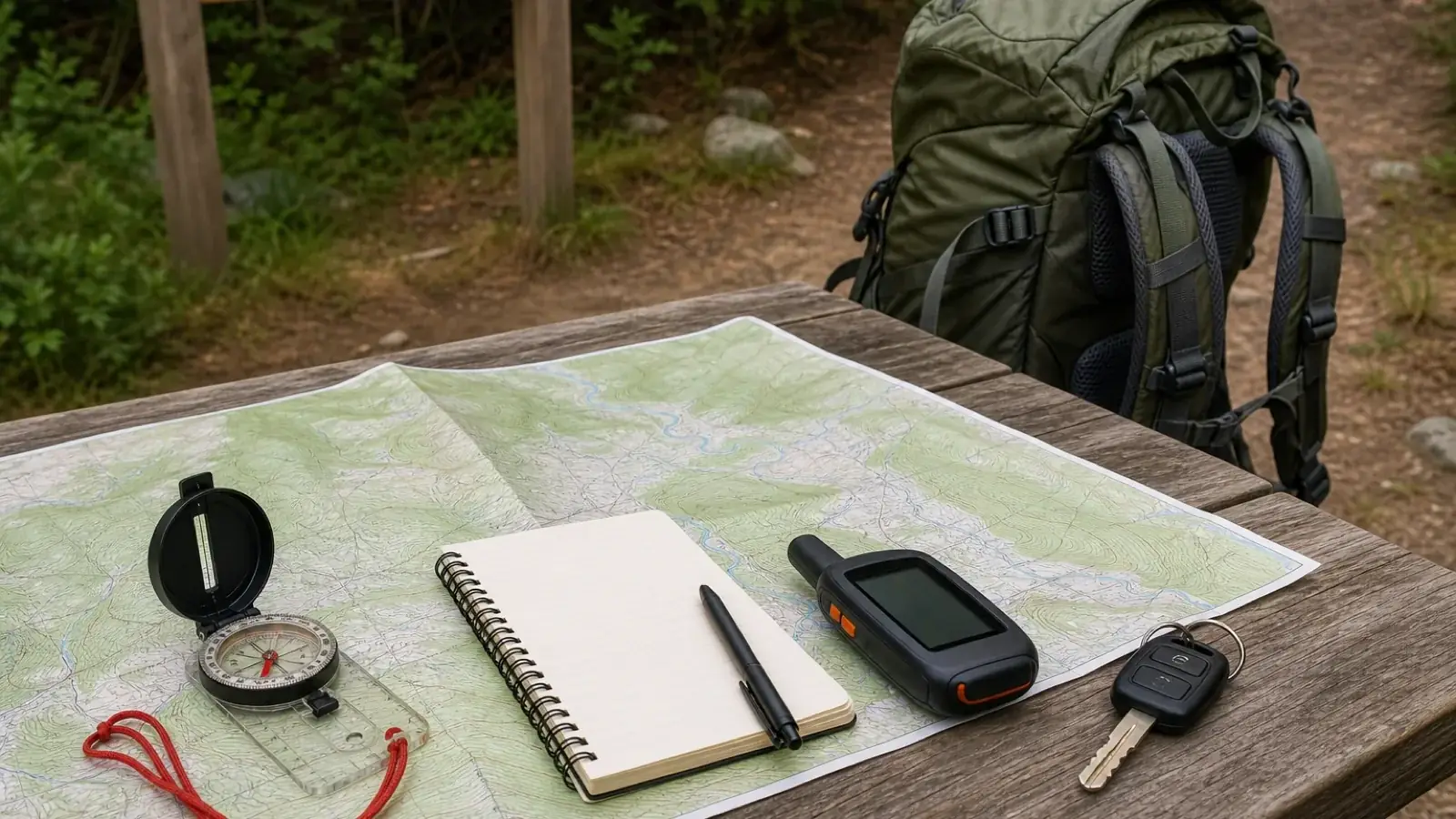
Redundant Navigation Systems: Maintaining a primary offline digital mapping application paired with a physical topographic map and a magnetic baseplate compass ensures spatial orientation during battery failure.
-
Two-Way Satellite Communication Devices: Equipping parties with independent satellite messaging units featuring global SOS functionality and real-time tracking integration for external family notification.
-
Comprehensive Wilderness First Aid Kits: Packing modular medical supplies tailored to specific environmental risks, including traumatic hemorrhage control, blister management, and pharmacological management.
-
Advanced Meteorological Modeling Software: Utilizing specialized high-altitude and regional weather forecasting platforms rather than generalized consumer weather applications.
-
Structured Trip Plans: Filing detailed itineraries with designated home contacts that include exact vehicle descriptions, trailhead coordinates, and mandatory check-in deadlines.
-
Caloric and Water Density Calculators: Mathematically auditing energy expenditure against food weight and calculating reliable water sources along with purification redundancy.
-
Emergency Thermal Shelters: Carrying lightweight bivouac sacks, emergency space blankets, or a group tarp capable of trapping body heat during unexpected forced overnights.
While these tools provide essential operational safety margins, they possess inherent limits. Electronic batteries degrade rapidly in sub-zero temperatures. Satellite units require unobstructed lines of sight to orbital constellations, rendering them vulnerable in deep slot canyons or dense forest canopies.
Risk Landscape and Failure Modes in Remote Environments
The operational risk landscape associated with backcountry travel is defined by compounding vulnerabilities. When an expedition suffers a minor navigational miscalculation that coincides with sudden hypothermic weather conditions and a twisted ankle, these isolated events compound into a severe multi-system emergency. This systemic fragility is exacerbated by decision fatigue. As physical exhaustion accumulates over consecutive days of heavy exertion, cognitive processing speeds decline. This decline leads to flawed risk assessments and hazardous short-cuts.
Another critical risk vector is socio-group pressure. In group expeditions, internal social dynamics—such as the reluctance of less experienced members to voice concerns—frequently override individual safety instincts. Mitigating these systemic failure modes requires establishing an open group culture. Any participant must hold absolute veto power regarding safety decisions, fostering an environment where turning back is celebrated as a rational success.
Governance, Maintenance, and Long-Term Adaptation
Maintaining institutional safety and personal competence across complex seasonal cycles requires disciplined monitoring, structured review intervals, and post-expedition debriefing. Because wilderness environments, regulatory permit structures, and equipment technologies evolve continuously, static planning habits lead to progressive vulnerability.
-
Pre-Trip Environmental Audits: Verifying current fire bans, trail closures, water source potability reports, and wildlife activity warnings via land management agencies prior to departure.
-
Mid-Expedition Tactical Reviews: Conducting nightly team briefings to evaluate physical fatigue levels, weather trends, water availability, and psychological morale against the master schedule.
-
Post-Expedition Failure Analysis: Documenting near-misses, equipment failures, miscalculated food rations, and navigational errors in a permanent log to refine future planning protocols.
Measurement, Tracking, and Evaluation Frameworks
Evaluating the success of a wilderness planning strategy requires balancing quantitative efficiency metrics against qualitative experiential and safety indicators. Quantitative tracking involves measuring daily caloric intake versus output, water consumption rates, pacing velocity, and schedule adherence. Qualitative evaluation assesses psychological group cohesion, stress management, thermal comfort, and environmental stewardship.
-
Documentation Example 1: The Caloric and Weight Audit Ledger: A pre-trip spreadsheet tracking total food weight, caloric density per ounce, and daily consumption targets across all expedition members.
-
Documentation Example 2: The Environmental Incident and Near-Miss Log: A formal record documenting unexpected weather events, wildlife encounters, slips, falls, and navigational deviations for continuous learning.
-
Documentation Example 3: The Thermal and Hydration Monitoring Matrix: A daily tracking log recording nighttime low temperatures, individual water filtration volumes, and electrolyte balance status.
Common Misconceptions and Oversimplifications
-
Myth: Carrying a satellite emergency beacon eliminates the need for conservative risk assessment or navigational skills.
-
Correction: Satellite devices summon rescue services, but response times in remote wilderness can span hours or days. Self-reliance remains the sole determinant of survival during this window.
-
-
Myth: Drinking directly from high-elevation, fast-flowing mountain streams is safe from biological pathogens.
-
Correction: Pristine-looking alpine water frequently contains microscopic parasites such as Giardia lamblia and Cryptosporidium, requiring mechanical or chemical purification.
-
-
Myth: Cotton clothing is acceptable for day trips if the weather forecast predicts clear conditions.
-
Correction: Cotton absorbs moisture, loses all insulating properties when wet, and dramatically accelerates conductive heat loss during unexpected temperature drops.
-
-
Myth: Following established digital GPS tracks on community-sourced apps guarantees a safe and passable route.
-
Correction: Community tracks often feature obsolete data, private property violations, unmaintained hazards, or extreme technical terrain unsuitable for standard hikers.
-
-
Myth: Group size does not affect safety; solo travel and large group travel carry identical risk profiles.
-
Correction: Solo travel eliminates peer support during trauma. Large groups complicate pacing and decision-making but offer increased labor capacity for emergency response.
-
-
Myth: If you get lost in the wilderness, you should immediately hike uphill to find a high vantage point.
-
Correction: Indiscriminate uphill scrambling expends critical caloric energy and increases injury risk. Standard protocols dictate staying put or navigating systematically via linear features.
-
-
Myth: Standard consumer weather apps provide sufficient forecasting data for high-alpine or remote desert environments.
-
Correction: Consumer apps interpolate regional weather data that fails to account for micro-climates, radical elevation shifts, and sudden topographical storm generation.
-
Ethical, Practical, and Contextual Considerations
The execution of wilderness travel intersects with profound ethical obligations toward fragile natural ecosystems and wildlife habitats. Uncontrolled backcountry camping, improper human waste disposal, trail erosion, and habituation of wildlife through unsecured food storage inflict severe degradation on remote environments. Responsible expedition planning incorporates strict Leave No Trace principles, carrying out all waste, respecting seasonal wildlife closures, and minimizing physical disturbance to vegetation and geological formations. True wilderness mastery balances personal adventure with absolute ecological stewardship.
Conclusion
Mastering how to plan wilderness trips safely requires a fundamental transition from passive recreation to active, systematic risk engineering. By abandoning rigid assumptions, evaluating objective and subjective hazards, deploying rigorous physiological and logistical frameworks, and maintaining uncompromising redundancy, travelers can navigate remote environments with intellectual clarity and physical security. True backcountry expertise is defined not by the absence of adversity, but by the capacity to anticipate, manage, and adapt to the unpredictable rhythms of the natural world.